The price on the contract is not the full amount a buyer needs to prepare. Split costs beyond the purchase price into three layers: certain costs (taxes and fees under current regulations), usual costs (agency fee, notarisation, maintenance fund, loan charges if any) and optional costs (furniture, repairs). Plan all three layers before paying a deposit so that you do not run short at the final step.
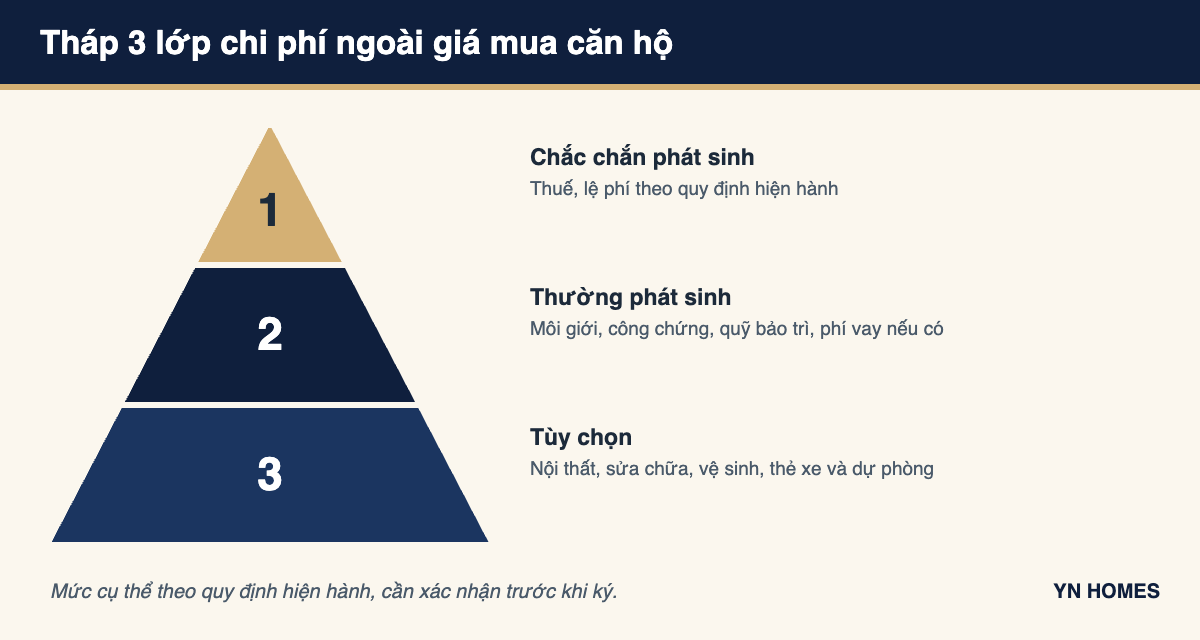
Layer 1: costs that will certainly arise
| 1 | Taxes and fees under current regulations. The exact amounts depend on the regulations in force and the type of transaction. Confirm them with the notary office or the developer at the time of signing rather than relying on figures heard second-hand. |
| 1 | Who pays what. In a sale the parties usually agree this and write it into the contract. The phrase "price includes all taxes and fees" only carries weight when it is in writing. |
Layer 2: costs that usually arise
| 2 | Agency fee. Agree it in writing in advance, stating who pays and when. |
| 2 | Notarisation and legal services. Notary fees and, where needed, a lawyer to review the documents before the deposit. |
| 2 | Maintenance fund and management fees. For units bought from a developer or already in use, ask which amounts are already paid and which the buyer must still pay, and check against the contract. |
| 2 | Loan costs. If you borrow from a bank, ask about appraisal fees, loan insurance and early repayment charges. |
Layer 3: optional costs worth planning
Furniture, repainting, cleaning, parking and lift cards are items buyers often overlook at deposit stage. View the unit carefully to judge the real repair needs: air-conditioners, kitchen appliances and plumbing and electrics. Units sold "as is" often carry repair costs that are outside the quoted price.
| 3 | Furniture. Buy the essentials first and add later. |
| 3 | Repairs and cleaning. Have a technician inspect before handover. |
| 3 | Contingency fund. Keep a reserve for the first months. |
A ten-minute cost worksheet
Draw a table with three columns: item, who pays, and when it is due. Fill in each line from the three layers above; where you do not know the figure, write "to be confirmed" instead of guessing. Send the table to the seller or agent to cross-check. This quickly shows any missing item, especially the amounts due at signing.
Key takeaways
|
Warnings
|
YN Homes helps buyers of premium apartments in Ho Chi Minh City prepare cost tables and review documents before the deposit. This article is general information, not financial or legal advice.