
When you need to leave an apartment before the lease ends, follow four steps: re-read the early termination clause, give written notice within the period stated in the lease, inspect the unit with the landlord and sign a settlement record. Most deposit disputes arise because one of these steps was skipped, not because of the amount.
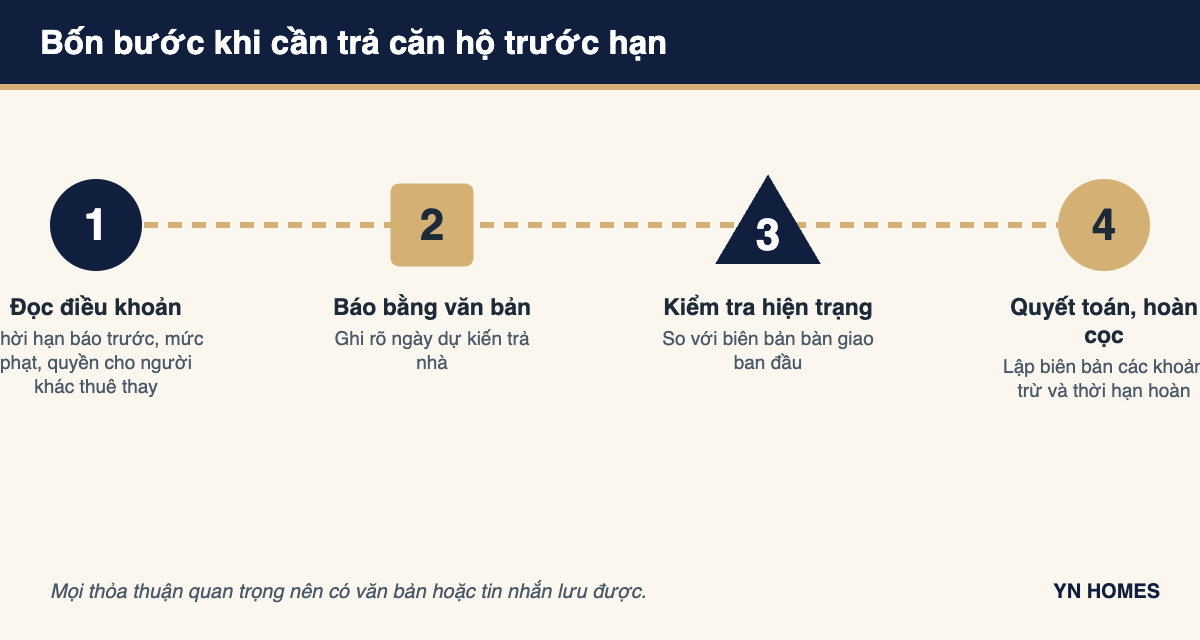
Step 1: re-read the early termination clause
| 1 | Notice period. Leases usually set a number of days or months of notice. Short notice is a common reason for a landlord to keep part of the deposit. |
| 2 | Penalty or forfeited deposit. Check whether the lease says the whole deposit, part of it, or a number of months of rent is forfeited. |
| 3 | Right to find a replacement tenant. Some leases let you introduce another tenant for the remaining term. If the lease is silent, ask the landlord and keep the reply in writing. |
Warning: if the lease has no clause on early exit, do not assume you are free to go. Agree the terms in writing with the landlord before moving out. For high-value leases or those involving foreign parties, seek legal advice.
Step 2: give written notice, not just a phone call
Send an email or message that can be saved, state the planned move-out date and ask the landlord to confirm. If the lease requires a specific form of notice, such as the email address named in the lease or registered mail, use exactly that form. A phone call is hard to prove in a dispute.
Step 3: inspect the unit with the landlord
Compare the unit with the original handover record and the photos or videos you took. Separate normal wear, such as slightly yellowed paint or small scuffs, from damage caused by the tenant. Settle electricity, water, internet and management fees up to the move-out date, and hand back all keys, lift cards and parking cards.
Step 4: settle and refund the deposit in a signed record
The record should list each deduction with its reason, the deposit amount to be refunded, the refund date and the payment method. Both parties sign and each keeps a copy. Do not hand back the keys and leave without a record. This is the most common reason a deposit stays unpaid for months.
If the two sides still disagree
Start by negotiating: offer to find a replacement tenant, pay a short extra period of rent, or share the agency cost. Many landlords accept a replacement tenant because the unit is not left empty. If no agreement is reached, keep every document and get legal advice before replying further.
Key takeaways
|
Warnings for both sides
|
YN Homes helps tenants and landlords review lease clauses and prepare handover records. This article is general information, not legal advice; specific cases should be reviewed by a lawyer.