
Before transferring a deposit on an apartment, a buyer should confirm four things: the seller is the lawful owner, the ownership certificate is free of mortgage or dispute, the actual condition matches the paperwork, and the deposit agreement protects the buyer if the deal falls through. The deposit is usually the first large payment in a purchase, and the hardest one to recover once it has been sent.
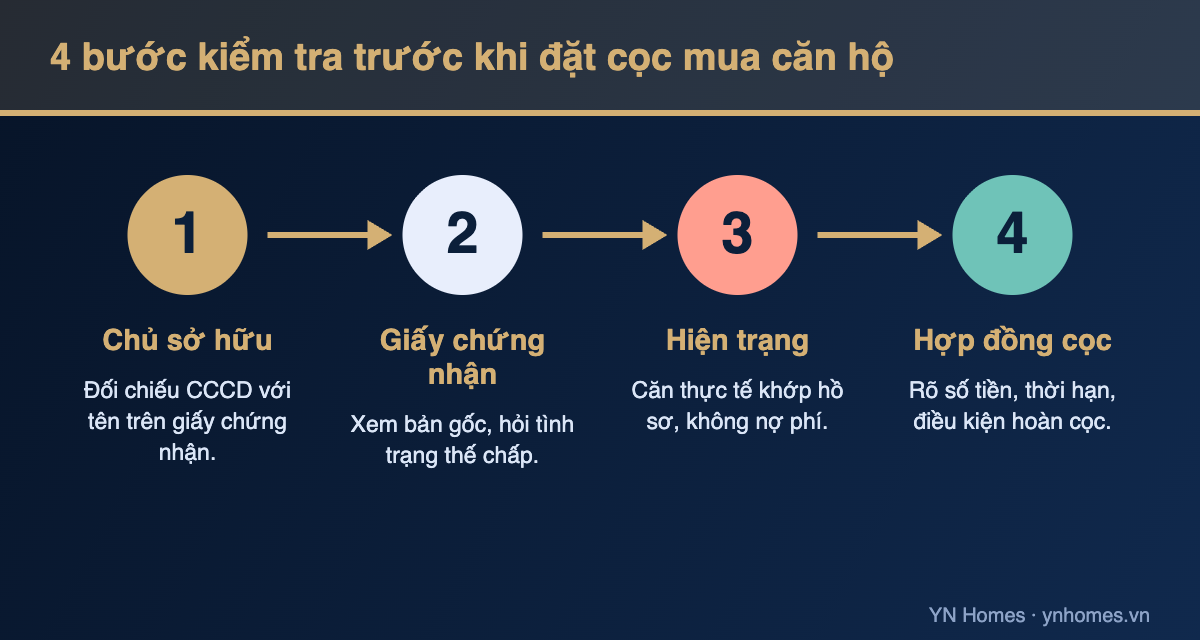
Step 1: confirm the seller is the owner
Compare the seller's national ID with the name on the ownership certificate. If the apartment is registered to a married couple, both should attend or provide a valid power of attorney. When someone signs on the owner's behalf, check that the power of attorney is notarized and states clearly that it covers both selling the apartment and receiving payment. Without both, the deposit may end up with a person who has no authority to take it.
| Warning: do not pay a deposit through an agent who cannot show written confirmation from the owner. A verbal “the owner agreed” carries no weight in a dispute. |
Step 2: match the certificate and check for a mortgage
Ask to see the original and compare its details with the real unit: unit number, floor, building and area. Then ask one direct question: is the apartment currently mortgaged to a bank? If it is, both sides must agree in writing who will release the mortgage, when, and with what funds. A common arrangement uses part of the buyer's first payment to clear the loan, but it should only be done with a clear process and the bank involved.
For a newly handed-over apartment that has no certificate yet, ask for the expected issuance date and write the seller's responsibility into the contract in case the certificate is delayed.
Step 3: compare the actual condition with the records
View the apartment at least twice, once in daylight and once in the evening, to notice noise, odors, water pressure and light. Look for renovations such as removed walls, extended balconies or a moved kitchen, which may not appear in the building's drawings. Ask the building management about unpaid management and maintenance fees, and have the owner commit to settling them up to the handover date.
Step 4: read the deposit agreement carefully
Read every clause before signing, even if the agent says it is a standard form. The minimum contents are summarized below.
| Item | What to state clearly |
| Deposit amount and price | Exact figures, payment method and date. |
| Deadline for the sale contract | The last date both sides must sign, and what happens after it. |
| Liability on cancellation | What each side bears if it cancels, under the agreement and the deposit rules of the Civil Code. |
| Refund conditions | Full refund if the apartment turns out to be disputed, seized or ineligible for transfer. |
| Receiving account | Transfer to an account in the owner’s name, never cash. |
When to stop or ask a professional to review
| Warning sign | What to do |
| The owner will not show the original certificate | Do not pay; ask for the missing documents. |
| Cash only, or an account not in the owner’s name | Stop the transaction. |
| A price far below similar units in the same building | Ask why; legal or condition problems are common. |
| Pressure to pay the deposit the same day | Pause and give yourself time to read the file. |
| Keep in mind: for a high-value purchase, have a lawyer or notary review the agreement before any money moves. This article is general information and does not replace legal advice for a specific case. |