
Before signing, a landlord should verify three things: who will actually live in the apartment, what it will be used for, and where the rent will come from. No rent offer, however high, replaces the answers to these three questions.
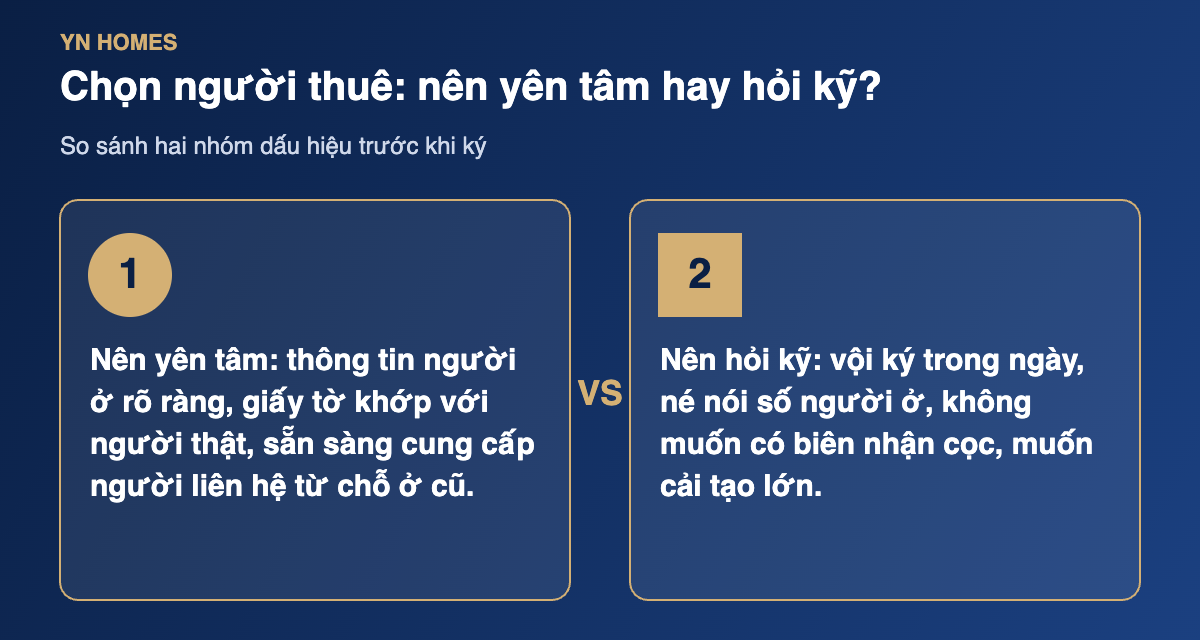
The person who signs is not always the person who lives there
A common case is one person signing while friends, colleagues or a whole family move in. When a company rents for staff, the signing party is a legal entity and the occupant is someone else. Both are normal as long as the lease states them clearly: the maximum number of occupants, the names of the residents, and who is responsible for damage or breaches of building rules.
Four questions to ask before signing
| 1 | What is the apartment for. Living, an office, or a short stay. These differ in wear and tear, in building management rules and in the type of lease needed. |
| 2 | How many people, and are there pets. Occupant numbers affect electricity, water and lift use. Pets need a separate agreement because many buildings restrict them. |
| 3 | How long will they stay, and why are they moving. Tenants who plan to stay longer usually look after the apartment better. The reason for moving also shows the condition in which they are leaving their last home. |
| 4 | Where does the rent come from. Personal income, a company, or a guarantor. If rent is paid quarterly or half-yearly, the risk of late payment drops noticeably. |
Documents worth checking
Match identity documents against the person in front of you, not only photos sent by message. For a company, ask for the business registration and the authorization of the person signing. For a foreign national, check that the passport and permitted stay remain valid for the lease term.
Collect only the information the lease actually needs, store it carefully, and do not post or forward it to unrelated people. It is the tenant’s personal data.
Signs that call for closer questions
| Pause and ask more when 1. The tenant wants to sign and move in the same day, with no time to review the lease. 2. They want to pay the deposit in cash and decline a receipt. 3. They avoid questions about the number of occupants or the use of the apartment. 4. They ask for major renovation or to sublet from the first month. |
A single sign proves nothing. When two or three appear together, step back, ask for further documents, or decline politely.
Landlord checklist
| Remember 1. The lease states the number of occupants and the names of actual residents. 2. Identity documents are matched against the person in a face-to-face meeting. 3. Always issue a receipt for the deposit. 4. For disputes, or a corporate tenant with its own terms, ask a lawyer to review the lease. |