
A rental handover record should capture three layers of information: readings and small items such as electricity, water, keys and cards; the condition of each appliance and piece of furniture; and photos signed off by both sides. Most deposit disputes at move-out start with a very ordinary cause: nobody wrote down what the apartment looked like at move-in, so each side remembers it differently.
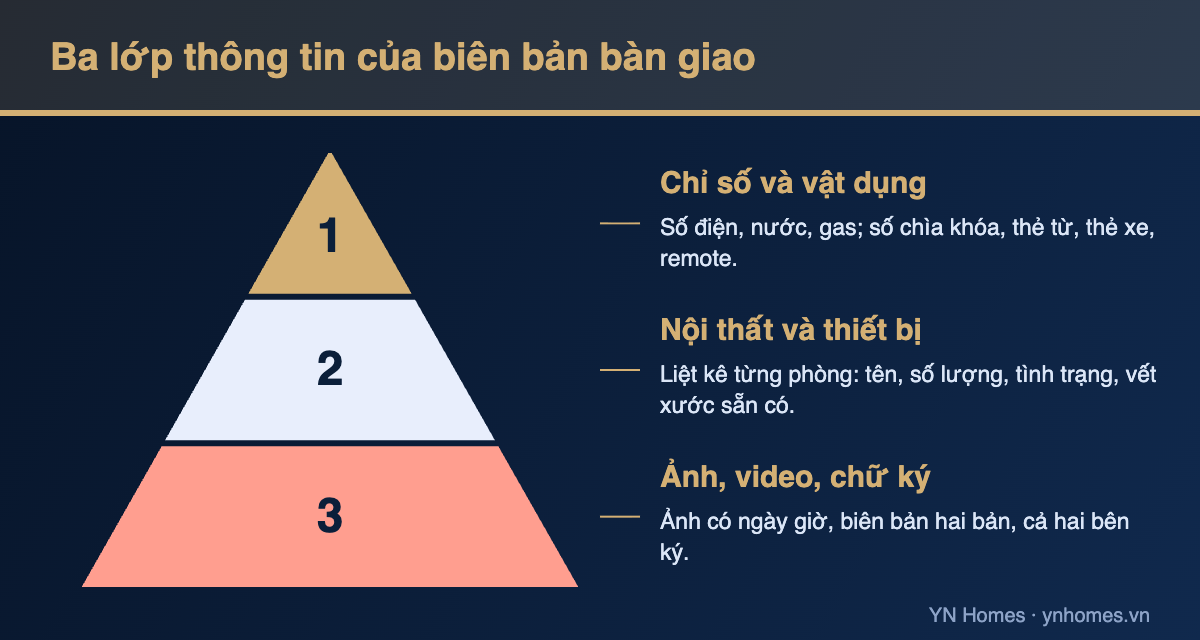
Layer 1: readings and items handed over
Record the electricity, water and gas (if any) readings on the handover date, with a photo of each meter. State the number of keys, elevator access cards, parking cards and air-conditioner remotes handed over. These small items often lead to deductions from the deposit, because building management usually charges a fee to reissue a lost card.
Layer 2: condition of furniture and equipment
Walk through each room and list every item in three columns: item, quantity, condition. Be specific, such as “new”, “used, working well” or “scratch on the left corner”, rather than just “normal”. The table lists the items that cause the most arguments.
| Item | What to record |
| Wood or tile floors | Existing scratches, stains, loose spots and their exact location. |
| Walls and ceilings | Damp stains near the bathroom, peeling paint, existing drill holes. |
| Bathroom fixtures | Shower, basin tap, toilet, sink edge and drainage condition. |
| Air conditioner, stove, water heater | Brand, whether it works, date of last service. |
| Curtains, mattress, sofa | Color, stains, existing wear. |
Both sides should also agree in the contract on how to tell normal wear (paint fading over time, a lightly dulled floor) from damage caused by use (a hole in a wall, a burnt stovetop, broken glass). Only the second should be deducted from the deposit.
Layer 3: photos, video and signatures
Photograph every corner of each room and film a slow video through each area, with the date and time visible. Send everything by email or a shared chat so both sides keep the same copy. Print the record in two copies, dated and signed by the landlord and the tenant, one copy for each.
| Warning: do not sign a line saying “received in full, good condition” before checking each room. In a dispute this sentence is the most damaging evidence against a tenant, and it also makes it harder for a landlord to prove the true condition. |
What each side should do
1. Landlord. Repair damage and clean the apartment before taking handover photos, so the photos show the true condition at handover. Keep purchase invoices for major appliances such as the air conditioner and water heater, as a basis for valuing any deduction.
2. Tenant. Inspect carefully in the first few days and report any additional defects by message or email, since a timestamped message is clear evidence. Do not repair equipment yourself before telling the landlord.
If a deposit dispute arises
| Situation | What to do |
| The landlord deducts from the deposit without receipts | Ask for the repair invoice or a quotation from the repair provider. |
| The two sides disagree on the amount | Compare the record and move-in photos, and try mediation through the agent first. |
| A large amount is in dispute | Consult a lawyer before deciding the next step. |
| Keep in mind: the more specific the record, the fewer the arguments. This article shares practical experience and does not replace legal advice for a specific contract. |