A tenant should sublet an apartment only when the landlord has agreed in writing and the sublease stays within the limits of the head lease. Without both, the person subletting risks termination of the lease and loss of the deposit, and the sub-tenant can lose their home mid-term.
The head lease decides everything
Before looking for a second tenant, reread the clauses on assignment and subletting in the lease signed with the landlord. Some leases forbid it outright, some allow it only with prior written consent, and some say nothing. Silence does not mean permission. To avoid disputes, ask the landlord to confirm by email or by a signed addendum.
Duration is a detail that is often missed. A sublease should not run longer than the time remaining on the head lease. If the head lease has 5 months left and a 12-month sublease is signed, the sub-tenant has no basis to stay for the last 7 months, and the person subletting is responsible to them.
Three conditions to meet before accepting a tenant
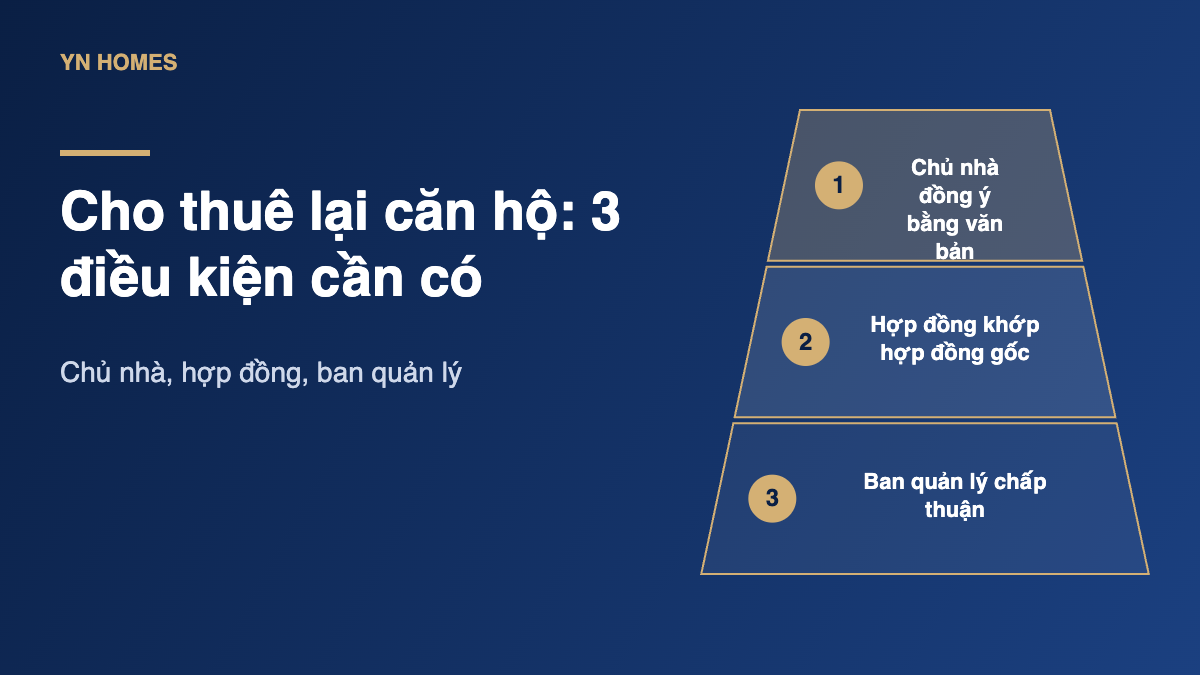
| 1 | Written consent from the landlord. The document should state whether the whole apartment or one room may be sublet, whether a higher rent may be charged, and whether the landlord may meet the tenant before signing. |
| 2 | A sublease that matches the head lease. Permitted use, number of occupants, pets, repairs and noise rules must not be wider than what the landlord has allowed. |
| 3 | Building management informed and in agreement. Access cards, residence registration, moving hours and the freight lift are usually managed under the original tenant. Notify management in advance so the new tenant is not stopped at the lobby on move-in day. |
Lines often missing from a sublease
Many subleases contain only a price and a term. When a dispute arises, these are the lines that matter:
- An inventory of furniture and equipment with photos taken on handover day, signed by both parties.
- Electricity and water readings recorded on handover day, and how bills are split if the meters are in someone else’s name.
- Management and parking fees: who pays, and on which date.
- Early termination conditions, especially if the landlord takes the apartment back before the end of the term.
On deposits: the amount received from a sub-tenant must be refunded at the end of the stay. Do not use it to pay next month’s rent to the landlord, because nothing will be left to return when the tenant moves out.
Common risks
| Warning 1. The landlord finds an unannounced stranger in the apartment, treats it as a breach and may terminate the lease. 2. The sub-tenant damages items and the landlord deducts directly from the original tenant’s deposit. 3. The listing is posted in several places and deposits are accepted from two people for the same move-in date. |
The third case happens more often than expected, especially when the original tenant is about to leave the city and needs someone to take over quickly. Accept a deposit only after the landlord’s written consent is in hand and one tenant has been chosen.
Checklist before posting a listing
| Remember 1. Have the landlord’s written consent before posting. 2. Keep the sublease term within the remaining head lease term. 3. Inform building management and prepare an inventory with photos. 4. If the head lease has a heavy penalty clause, or several people will share the apartment, consult a lawyer before signing. |